Thirty Years of Pattern Recognition in Generator Failure Analysis
Across 300+ generating units on five continents, our case files encompass a broad range of major failure mechanisms in large generators. This depth of experience means the next failure rarely looks like a first encounter — it typically aligns with known patterns, signatures, and root causes we’ve seen before. The advantage of three decades of specialized focus is faster, more accurate root cause identification and targeted mitigation strategies.
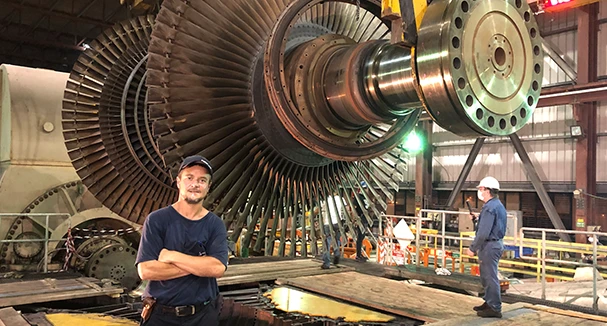
Failure Mechanisms Investigated
Every failure scenario is unique, along with its own particular solution. Some of the most common failure modes include but are not limited to:
- Rotor thermal sensitivity
- Shorted rotor turns
- Mechanical imbalance
- End Winding / Connection Ring Issues
- Winding insulation degradation
- Mica insulation abrasion
- Hydrogen cooler leaks
- Collector ring contamination
- Diode wheel failures
- Field ground events
- Excitation control failures
- Loose stator core and belly band resonance
- Stator Partial Discharge / Corona Damage
Diagnostic Certifications
Siemens Fiberoptic Vibration Sensor Training. Siemens Generator Specialist Program. GE Excitation and LCI Program. GE Generator Specialist Program. AGT Services Advanced Generator Training. Doble Engineering partial discharge and M4100 tangent delta testing.
Chemical Signatures in Forensic Samples
Silicates indicate abraded mica insulation. Iron oxide flags loose stator core. Lead carbonate indicates hydrogen cooler leaks. Greasing on stator components signals loose blocking and tie failures. Each signature corresponds to a specific, well-understood mechanism.