CASE STUDY
Comprehensive HIT Skid Testing on a Complex 600 MW Westinghouse Liquid-Cooled Stator
600 Megawatt Steam-Driven Westinghouse Unit near St. Louis, Missouri.
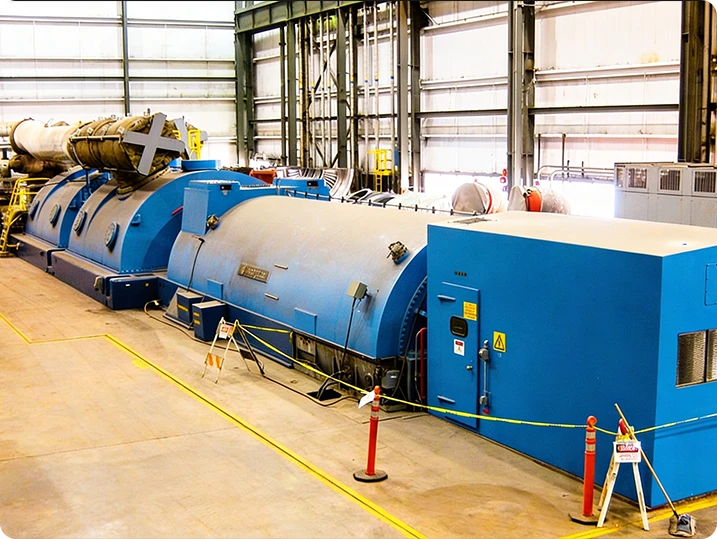
600 Megawatt Steam-Driven Westinghouse Unit near St. Louis, Missouri.
During a major outage on a 600-megawatt Westinghouse liquid-cooled generator, I was tasked with performing a full Hydraulic Integrity Test (HIT) on the stator cooling water system (SCWS). This unit featured an unusually complex piping network, making it one of the more challenging “odd ball” configurations I have encountered. With eleven separate flanges and connections spread across the stator, the project required precise identification of every flow path before any testing could begin. The goal was to safely and thoroughly validate the integrity of the entire cooling system — including stator windings, parallel rings, and high-voltage bushings — before returning the unit to service.
The cooling system piping was exceptionally intricate. There were eleven flanges or connections that needed to be correctly categorized: which ones required isolation, which pipes needed to be capped or blinded, and which would be actively used during the testing process. The existing P&ID was cryptic and difficult to follow, offering limited clarity on the actual installed configuration. Any mistake in isolation or testing sequence risked incomplete coverage, false leak indications, or even damage to the stator bars. The customer needed absolute confidence in the results, especially given the high value of the 600 MW machine and the operational impact of any future failure.
Over two intensive weeks, a detailed field investigation was conducted using systematic pipe tracing combined with experimental flow and pressure validation. Every accessible pipe, manifold, tee, orifice, and connection was meticulously documented. Pressure testing of isolated sections, flow-direction verification, and temporary instrumentation revealed a critical and previously undocumented finding: the generator was composed of two distinct and independent water-cooling circuits—a topology rarely seen in this exact configuration that I had not yet encountered in my 30 years in the field.
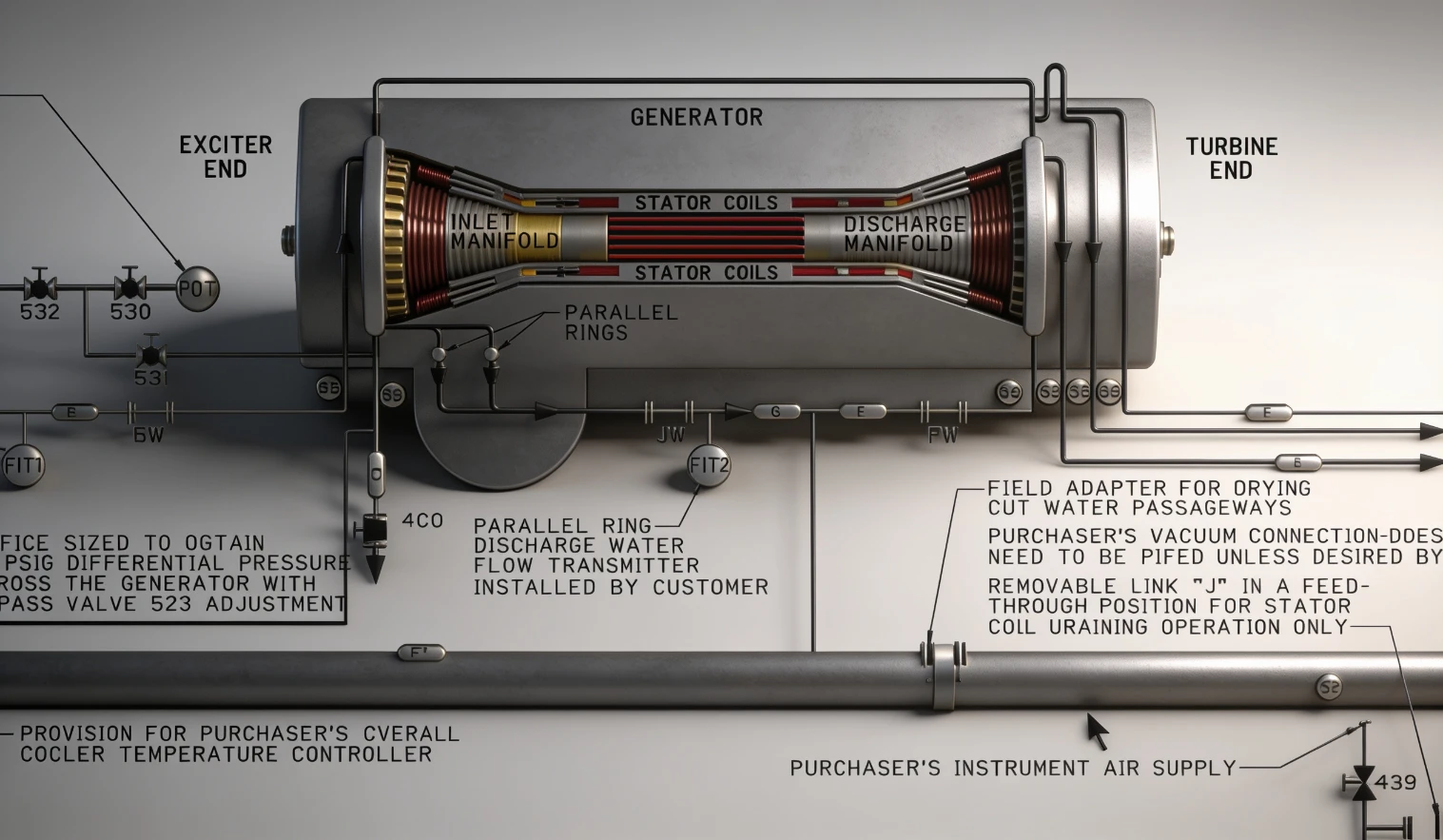
Unit P&ID (non-proprietary)
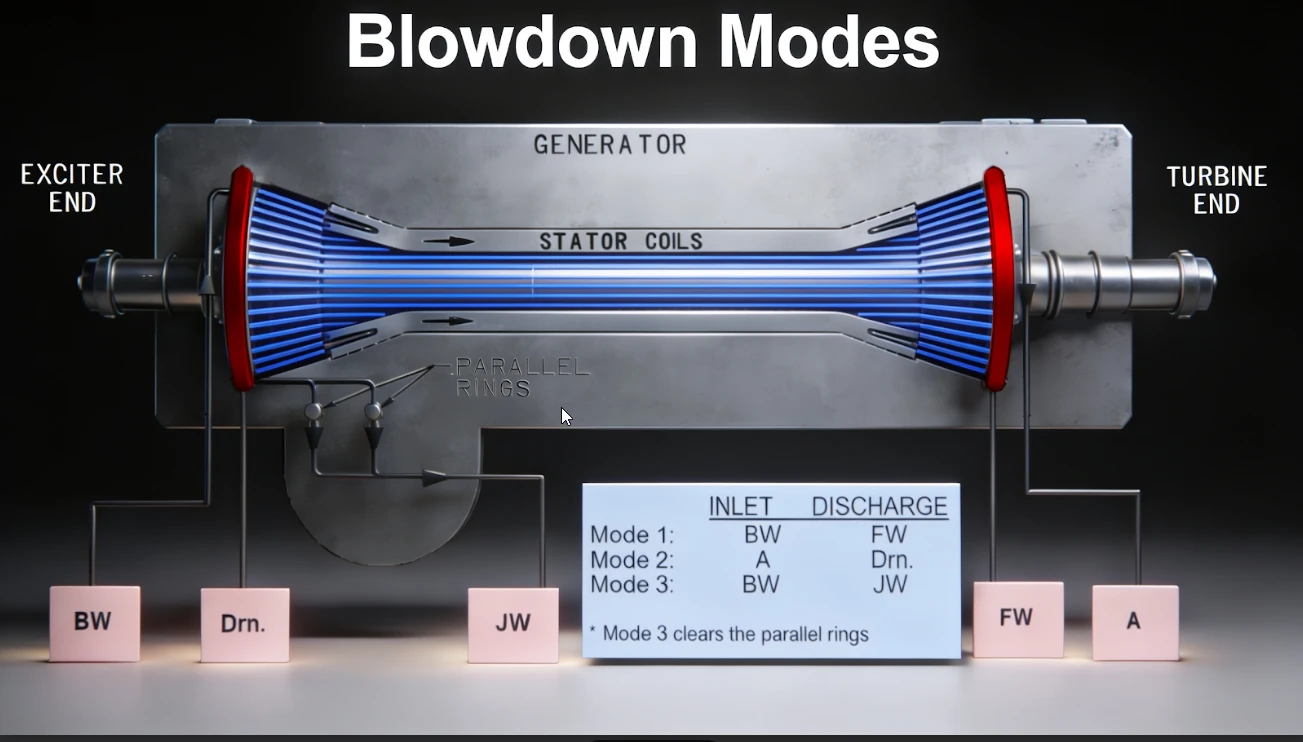
Using the newly verified piping logic, I designed and implemented a comprehensive, multi-stage HIT skid testing regimen that included all of the following:
Special attention was given to proper isolation and blinding of the eleven connection points to ensure each section of the system was individually and collectively validated.
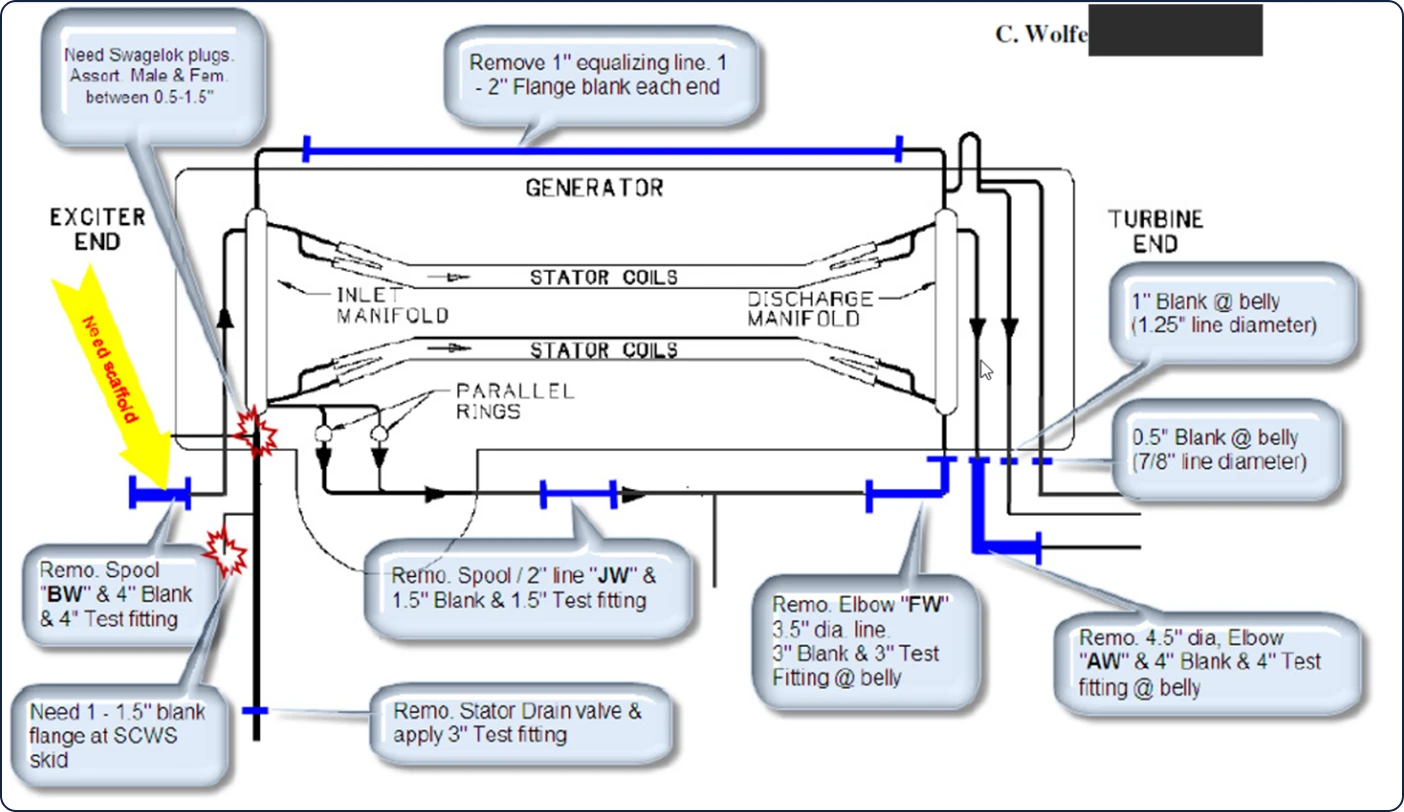
Explanation of what needed to be done at each of the 11 isolation points on the SCWS
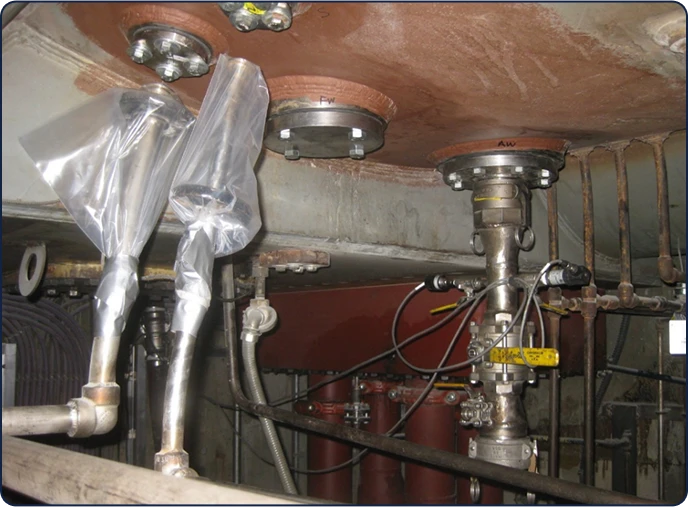
Complexity of piping connections underneath the stator belly.
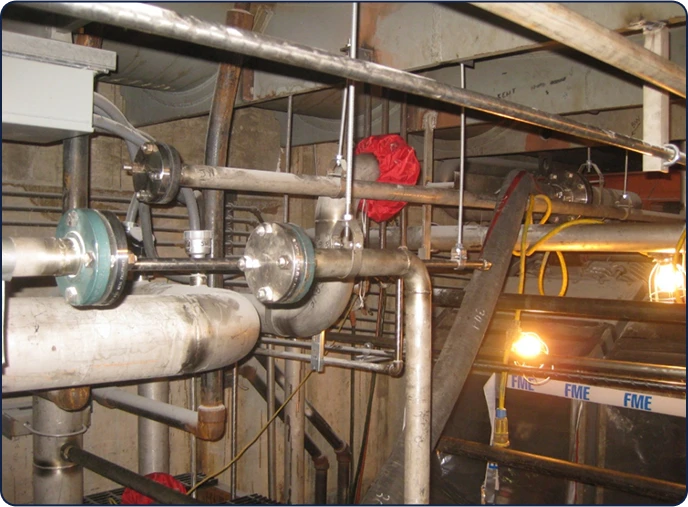
More complexity of piping connections underneath the stator belly.
All testing phases were completed successfully. No leaks were detected across the entire stator cooling water system, and capacitance mapping confirmed all winding bars were completely dry. The unit was cleared for reassembly and return to service with full confidence in the integrity of the cooling system. As with the earlier BBC project, I delivered a detailed report to the customer containing the complete piping logic, test sequences, isolation points, and all discoveries made during this outage. This documentation was created with the explicit goal of helping any future engineer — regardless of employer — execute the same work more efficiently. This project strongly embodied Generex’s core value of INTEGRITY — always placing the customer’s best interests first, with no concern about sharing knowledge that might help others in the future. There will always be more than enough work for skilled professionals who deliver real value.
This case once again demonstrates that treating every generator as unique, investing the time to fully understand its actual configuration, and prioritizing customer success leads to safer, more reliable outcomes and stronger client relationships.